

Why Healthcare Website Design Matters More Than Ever
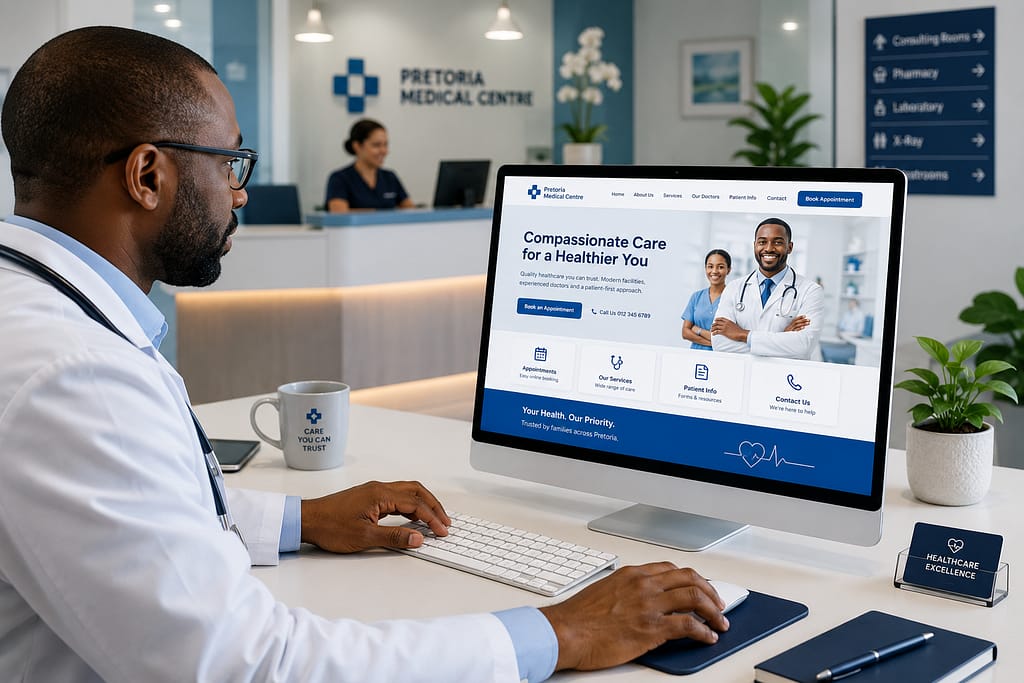
Patients no longer rely only on referrals when choosing a healthcare provider. Before booking an appointment, most people search online to learn more about a clinic, doctor, dentist, physiotherapist, psychologist, or specialist. Your website has become your digital reception area. Within seconds, visitors decide whether they trust your practice enough to make an appointment.
A professional healthcare website should do more than look attractive—it should inspire confidence, answer common questions, and make it easy for patients to contact or book with you. Whether you’re running a private practice in Pretoria or serving patients across South Africa, investing in professional healthcare website design can significantly improve your online presence and help your practice grow.
Ready to give your practice a professional online presence?
1. Build Trust Before Patients Walk Through Your Door
Healthcare is built on trust.
Patients want reassurance that they’re choosing the right healthcare provider.
Your website should immediately communicate professionalism through:
- Professional branding
- High-quality photography
- Clear service descriptions
- Doctor profiles
- Patient testimonials
- Contact information
A clean, modern healthcare website immediately creates confidence.
2. Make Appointment Booking Easy
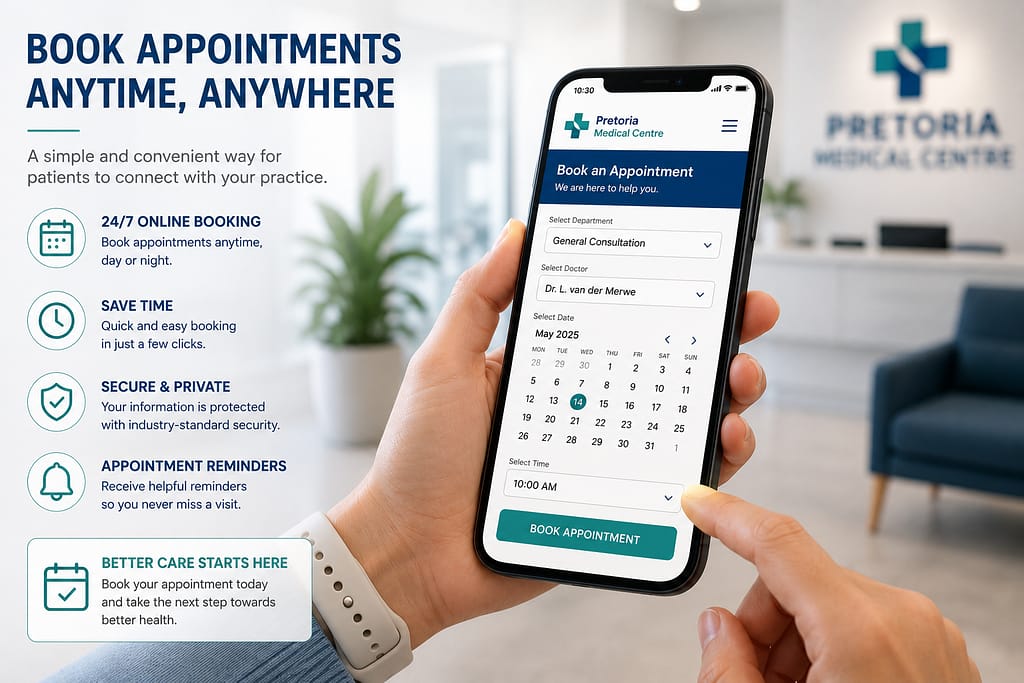
Patients don’t want complicated booking systems.
A good healthcare website should include:
- Appointment request forms
- WhatsApp booking
- Click-to-call buttons
- Google Maps integration
- Contact forms
The easier it is to book, the more enquiries you’ll receive.
Want an online booking system that works 24/7?
3. Optimise for Mobile Users
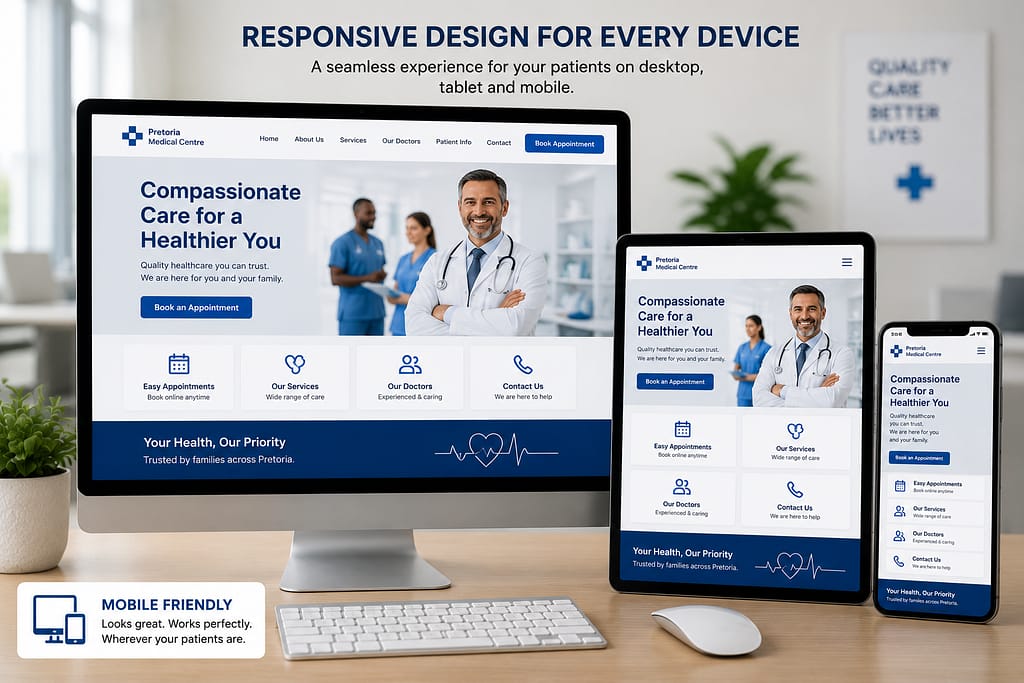
More than half of healthcare searches now happen on mobile devices.
Your website should automatically adapt to:
- Smartphones
- Tablets
- Desktop computers
A responsive healthcare website improves user experience while also supporting better Google rankings.
Patients should never struggle to:
- Find your phone number
- View your services
- Locate your practice
- Book appointments
4. Help Patients Find You on Google
An attractive website is useless if nobody finds it.
Professional Healthcare Website Design includes:
- Search Engine Optimisation
- Fast loading speeds
- Secure HTTPS
- Structured headings
- Optimised images
- Local SEO
These elements improve your chances of appearing when people search for:
- Doctor near me
- Dentist Pretoria
- Physiotherapist Pretoria
- Medical clinic Pretoria
Need a website designed to rank on Google?
5. Showcase Your Medical Services Clearly

Patients should immediately understand:
- What services you provide
- Who you help
- Your qualifications
- Your specialties
- Treatment options
Avoid overwhelming visitors with large blocks of text.
Instead, organise information using:
- Icons
- Service cards
- Images
- Frequently Asked Questions
- Clear navigation
The easier your website is to navigate, the more likely patients are to book.
6. Protect Patient Confidence
Healthcare websites should communicate professionalism and security.
Include:
- SSL certificates
- Privacy policy
- POPIA compliance information
- Secure contact forms
- Professional imagery
Patients are far more likely to trust a practice that demonstrates transparency and professionalism.
7. Turn Visitors Into Patients
A healthcare website should actively encourage action.
Every page should contain clear calls-to-action such as:
- Book Appointment
- Request Consultation
- Contact Our Practice
- WhatsApp Us
- Get Directions
Your website should guide visitors naturally towards becoming patients.
Don’t let potential patients leave your website without contacting you.
Why Choose a Professional Healthcare Website Designer?
Healthcare websites require a different approach from ordinary business websites.
Patients expect:
- Trust
- Privacy
- Clear communication
- Fast loading
- Easy navigation
Professional designers understand how to combine excellent user experience with strong branding and effective SEO.
When designed correctly, your website becomes one of your practice’s most valuable marketing assets.
Frequently Asked Questions
Why is Healthcare Website Design important?
A professional healthcare website builds trust, improves patient communication, and makes it easier for people to book appointments.
What should every healthcare website include?
Every healthcare website should include service pages, doctor profiles, contact details, online booking, testimonials, FAQs, and mobile-friendly design.
Can patients book appointments online?
Yes. We can integrate online booking forms or appointment scheduling systems.
Is SEO important for healthcare websites?
Absolutely. SEO helps potential patients find your practice when searching online.
Can you redesign my existing healthcare website?
Yes. We modernise outdated medical websites while improving speed, SEO, and user experience.
Do healthcare websites need to be mobile-friendly?
Yes. Most patients browse healthcare websites using smartphones.
How long does it take to build a healthcare website?
Most healthcare websites are completed within a few weeks, depending on project complexity.
Can you design websites for specialists?
Yes. We design websites for doctors, dentists, physiotherapists, psychologists, optometrists, pharmacies, clinics, and other healthcare professionals.
Do you work with practices outside Pretoria?
Yes. We work with healthcare providers throughout South Africa.
How do I get started?
Simply contact us for a free consultation, and we’ll recommend the best website solution for your practice.
Ready to Grow Your Practice Online?
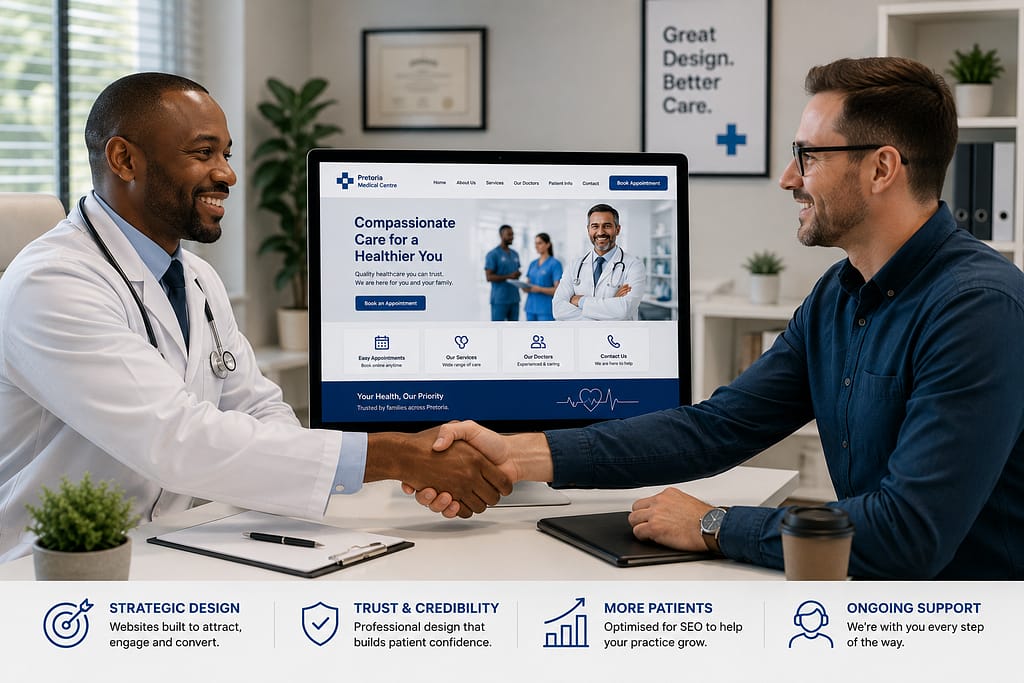
A professional healthcare website helps patients trust your practice before they even walk through your door. With the right design, SEO strategy, and user experience, your website can become one of your most effective patient acquisition tools.
Whether you’re opening a new practice or upgrading an existing website, investing in professional healthcare website design is an investment in the future of your practice.